Before choosing a larger carton or a multi-buy offer, add up the soya drink you already expect to use within that carton’s after-opening instructions. Include only the people and occasions you have confirmed. Then compare that volume with the pack quantity.
If you live alone and use a little in coffee, that plan may differ from someone who drinks a glass at breakfast. A second person changes the calculation only if they actually want to share the drink. Keep your usual choices; there is no need to drink extra to finish a pack. Singapore’s public food-waste guidance recommends checking what you have and buying what you can finish. Government of Singapore: reducing food wastage
Check the exact variant and current carton
MARIGOLD’s Singapore range page lists PowerBeans Reduced Sugar in 475 ml and 946 ml, while Unsweetened is listed at 946 ml. Do not assume the small carton is the same variant as a large carton you usually buy. Check what is actually available at your shop. Manufacturer’s range
For this worked example, we read the manufacturer’s packaging shown in FairPrice’s photographs of the Reduced Sugar 946 ml carton and 475 ml carton. Both photographed storage panels specify 0–4°C refrigeration and best consumption within three days after opening. The small carton’s side panel confirms 475 ml.
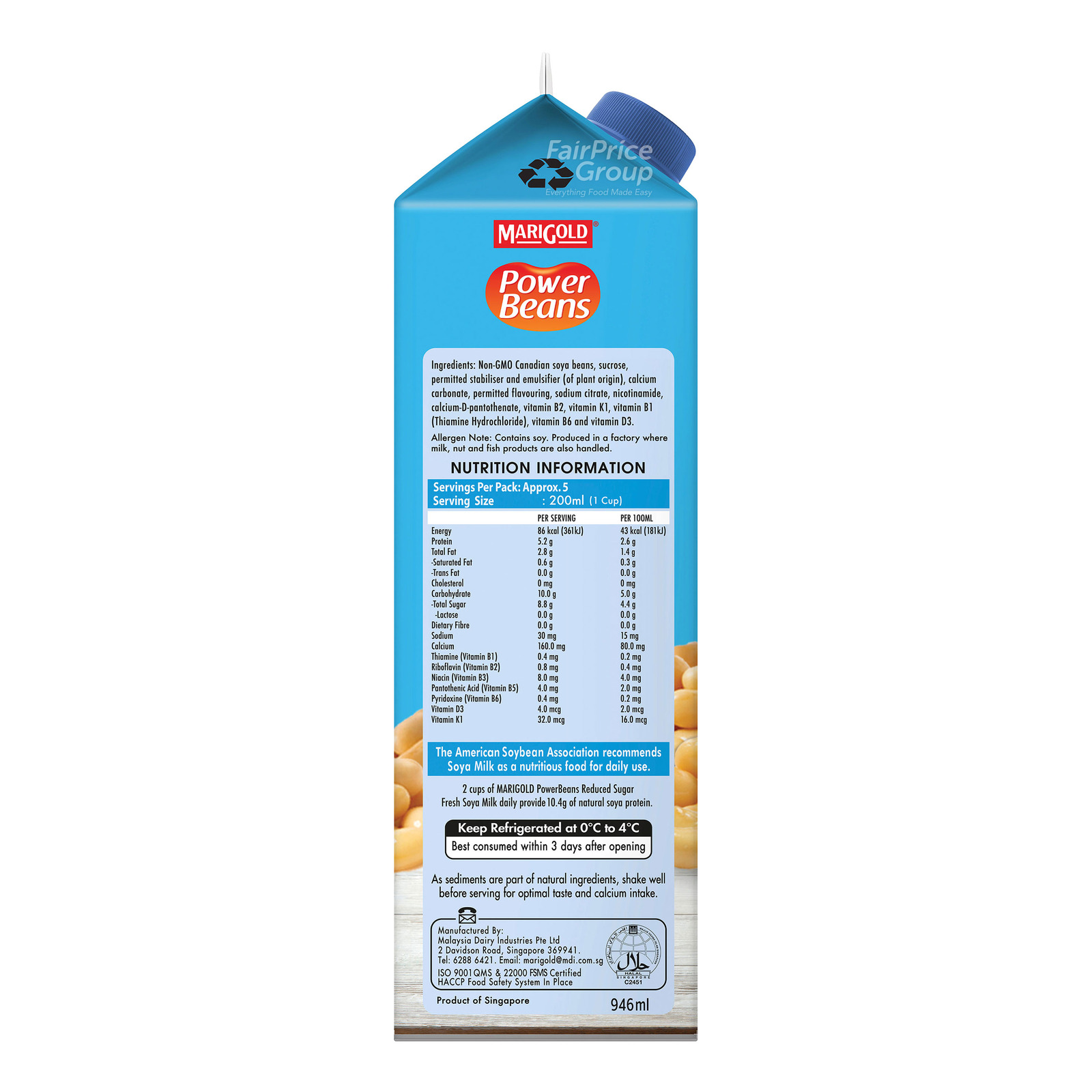
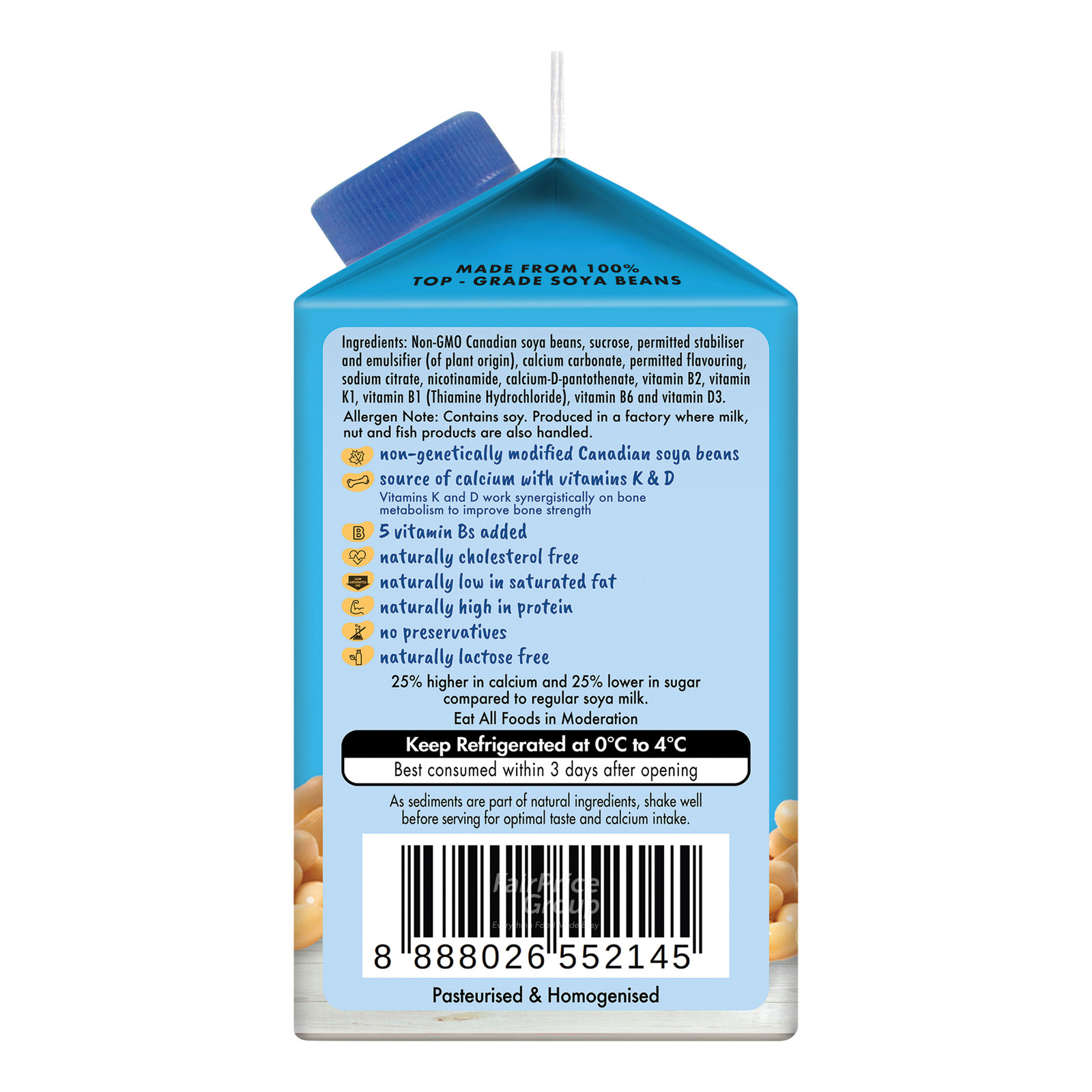
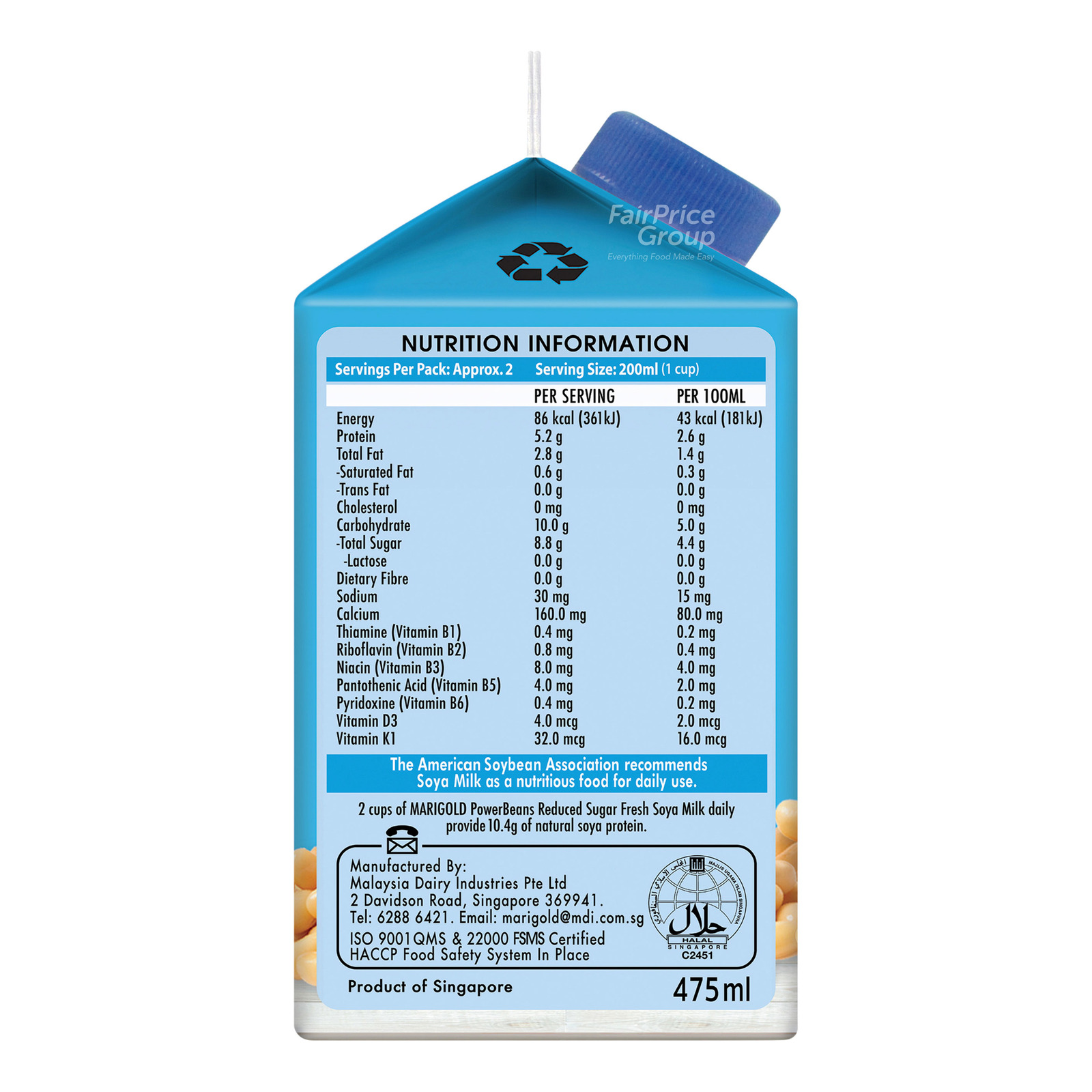
Read the carton you are buying before applying those instructions. We checked these online photographs on 19 November 2026; their filenames contain 2023 and 2024 dates, which do not establish when they were taken or whether all current stock is unchanged. Use them to see which information to find. Current packaging, product details and shop availability may differ. The retailer’s 946 ml listing and 475 ml listing identify the products; they do not guarantee your shop has them.
Write down the exact name, net volume, printed date, storage conditions and after-opening wording. If you cannot confirm an instruction, leave it unresolved and ask the manufacturer or retailer before relying on it. NEA’s food-waste guide likewise advises following the product’s storage instructions and checking whether an offer can be used before expiry. NEA guide, printed pages 19–20
Count planned use before comparing packs
List the pours or recipe quantities you already intend to use while following the current carton’s instructions. Leave out breakfasts away from home and unconfirmed guests. A mug’s capacity is not necessarily the amount of soya drink you add; use the amount you actually plan to pour.
Planned use = the sum of those quantities. Compare it with the carton’s net millilitres, rather than a rounded “servings per pack” figure.
These are fictional arithmetic examples. Each assumes three planned occasions fit within the checked pack’s storage and date instructions. 150 ml is an arbitrary example quantity, not a recommended serving or nutritional target.
| Existing plan | Total planned use | One 475 ml carton | One 946 ml carton |
|---|---|---|---|
| One person plans 150 ml on each of three occasions | 150 × 3 = 450 ml | 25 ml remains | 496 ml remains |
| Two confirmed users each plan 150 ml on those three occasions | 2 × 150 × 3 = 900 ml | 425 ml short | 46 ml remains |
For the second example, two 475 ml cartons would provide 950 ml, leaving 50 ml in total under the same use assumptions. That option also needs a plan for when each carton is opened. The calculation does not compare price, recipe, protein or sugar, and it does not show that one size is always better.
The remainder is a planning estimate, not a reason to extend the printed after-opening period. If your plan repeatedly leaves more than you want, consider a smaller available quantity or a different product whose own instructions you have checked. Do not assume freezing or reheating extends this product’s instructions.
Give each carton in a multi-buy its own plan
Check each carton’s printed date and storage conditions before buying more than one. Write when you expect to open the second carton and how you expect to use it. Leave those fields unknown if you have not decided; a lower price per carton does not fill them in.
Keep an unopened carton in the conditions its label specifies. When you open it, record that opening separately. Do not use the first carton’s note for both or plan to extend an opened carton’s instructions because another carton is waiting.
Copy a pack-quantity record
Use paper or your own private note. The record needs no name, diagnosis or nutritional target.
Keep a blank planning sheet
Copy this sheet into your own notes or use a paper copy. Complete it privately; this page does not collect or save your answers.
Exact product and variant:
Pack net volume in ml:
Current carton checked on:
Printed date and exact wording:
Storage conditions on this carton:
After-opening instruction on this carton:
Expected opening date, or not yet decided:

Planned occasions within those instructions:
Amount of this drink on each occasion, in ml:
Confirmed people using it:
Total planned volume in ml:
Pack volume minus planned volume — remainder or shortage:

If buying another carton — its own printed date:
Its expected opening and use plan, or unresolved:
Information to ask the manufacturer or retailer:
Quantity I have decided to buy, or decision still open:
Actual opening date when opened:
Copy the blank sheet
Print a paper copy
The printed guide includes the blank sheet and its sources. Write your answers on your own copy.
For protein or sugar comparisons, use the existing documented food-label comparison. That is a separate question from how much of a chosen drink you expect to use.
Copy the record and fill it in for one exact product before your next purchase.