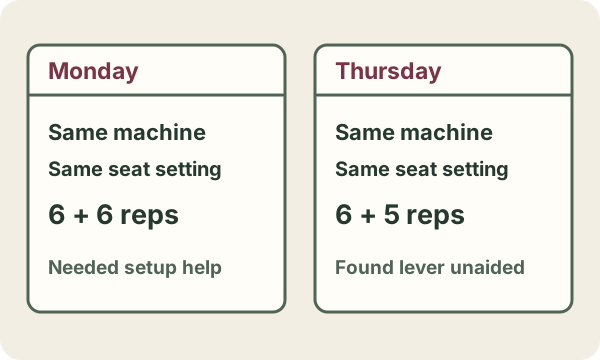
Choose one thing you can describe and compare, such as setting up the same machine with fewer prompts. Include the conditions. “I feel stronger” can start a useful conversation, while a specific observation helps you explain what changed.
Singapore’s Physical Activity Guidelines cover aerobic activity, strength and balance. The guidance for people aged 65 and above also discusses staying able to do everyday activities. Singapore Physical Activity Guidelines Guidelines for older adults aged 65 and above
Make a three-part review card
| Area | Choose one observation | A question you can ask |
|---|---|---|
| A gym skill | I can set the seat and check that it has locked. | Where would I still like the trainer to watch? |
| A routine | I made the Saturday booking. I keep missing the weekday slot. | Would another time work better? |
| An everyday activity | On the walk home from the market, I noticed when I wanted to put my bags down. | Were the bags heavier or was the route different? |
Note what happens on an ordinary day. If you want to travel more comfortably, you might write down how it felt to move through a station with your luggage. When you look back, consider anything that changed, such as your bags, the route or how much sleep you had.
Review what you can use next time
Here is a completed review from a fictional client.
| What to note | Example |
|---|---|
| Goal | Learn to set up the chest press and find one time I can train most weeks. |
| Observation | I set the seat without help on my last visit. I made two Saturdays and missed a weekday booking. |
| What changed | The gym was quiet on Saturdays. I had more time to read the instructions. |
| Next question | Can we check my chest press setup again when it’s busier? What can I work on when the machine is taken? |
This shows what the client remembered and which slot worked for them. A quiet visit gave them more time to set up. Keep that detail when you compare another visit.
A useful comparison repeats the question. If you are tracking a gym skill, return to the same machine and note what help you needed. If you are describing a market trip, note the route and load. These observations can guide a review without turning an everyday task into a clinical test.
With dumbbells, one extra controlled repetition in the same setup is something you can compare across visits. If the next pair changes how you move, see how to compare the weight gap and choose what to practise next.
Keep short notes in a training log or bring them to a discussion about what to practise after the programme. If a movement has become more difficult in a way that concerns you, speak with the appropriate healthcare professional.
Quick reference
Collection information
How can I notice progress beyond my weight?
Choose one skill, routine or everyday task to discuss with your coach.
How can I notice progress beyond my weight?
Choose one skill, routine or everyday task to discuss with your coach.Think about a task that was confusing on an earlier visit. Can you now find the instructions, remember the setup or fit a session into your week? When comparing visits, allow for changes such as a quieter gym or more time to practise.
Try the guide’s three-part reviewFull reference: https://sghomewellness.com/guides/progress-beyond-the-scale/#make-a-three-part-review-card
Content reviewed 2026-11-19.
Sources Singapore Physical Activity Guidelines for older adults